
Everest Gear: Essential Equipment & Modern Innovations
Clothing & Summit Suit
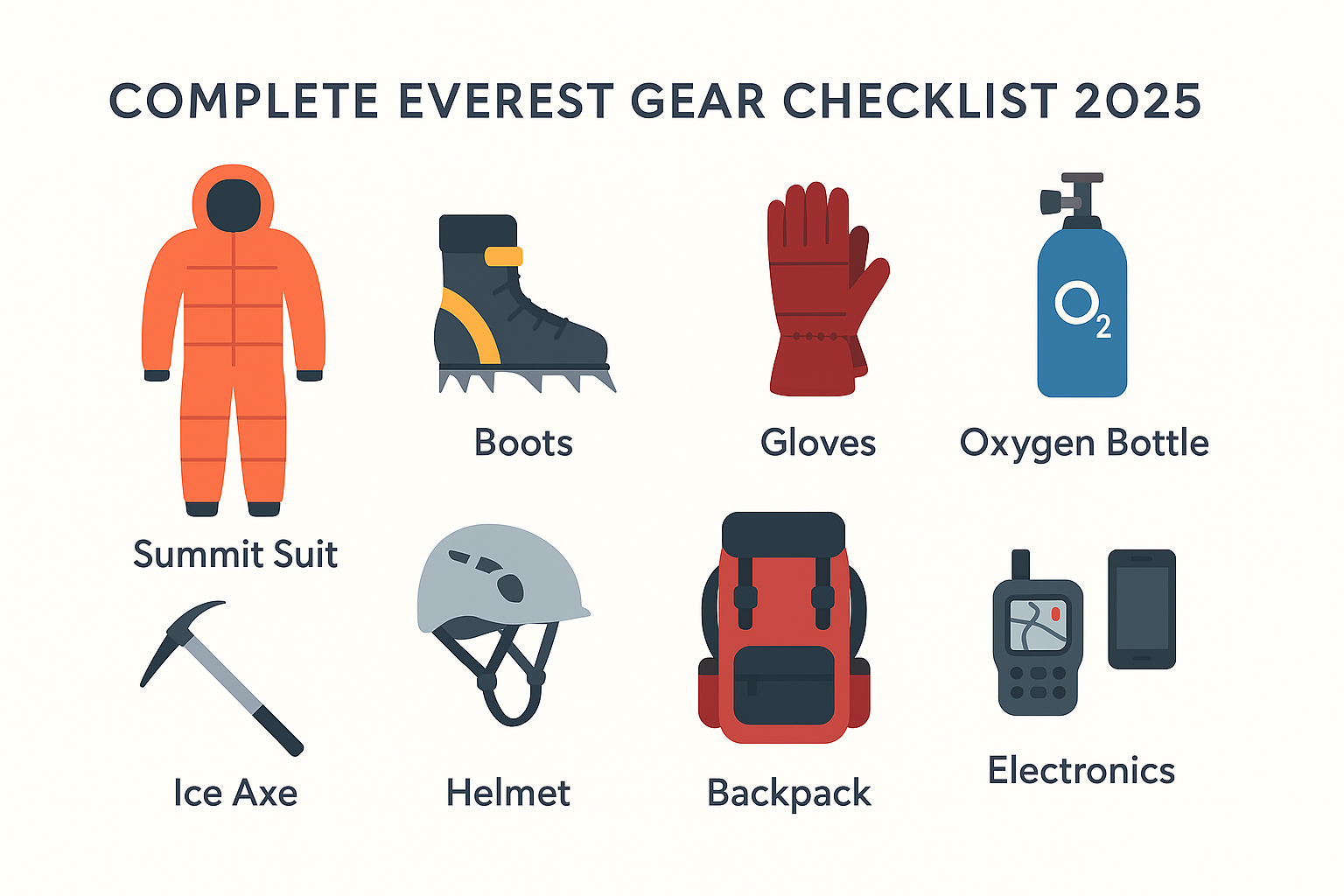
The primary line of defense against temperatures that can plummet below -40°C is a sophisticated layering system, culminating in the iconic Mount Everest summit suit. This mount everest climbing gear has evolved alongside advances in material science, transforming comfort, weight, and safety for climbers attempting the world’s highest peak.
From Mallory’s Tweed to Modern Down Suits
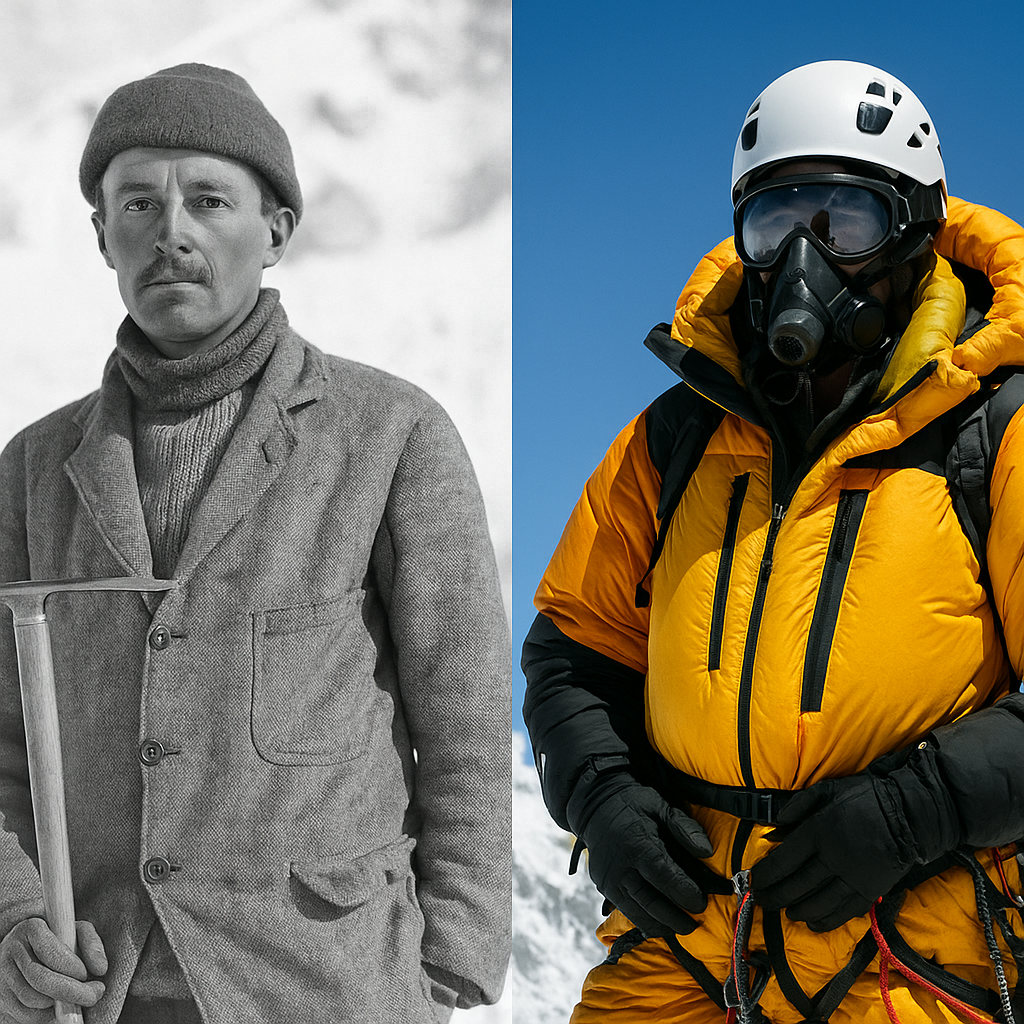
The famous Mallory clothing vs modern summit suits comparison highlights the incredible technological leap. George Mallory and Andrew Irvine attempted the summit in the 1920s wearing layers of silk, cotton, and wool under windproof gabardine and tweed jackets. Despite being the best available then, this equipment was heavy, restrictive, and provided minimal insulation when damp.
Today’s suits are one-piece, down-filled marvels engineered for maximum warmth at minimum weight. Made with materials like Gore-Tex, Pertex Shield, and other breathable membranes, they are fully waterproof, windproof, and filled with the highest-quality 800–900 fill-power goose down. These Mount Everest gear innovations have redefined insulation at altitude, adding features like helmet-compatible hoods, internal harness loops, and emergency oxygen mask integration. For deeper insights, see our guide to modern down and synthetic summit suits.
Down Suit vs Synthetic Insulation for Everest
Down offers unmatched warmth-to-weight ratio but loses efficiency when wet. Synthetic fills like PrimaLoft retain heat when damp, making them safer during extended expeditions.
Best Layering Systems for Mount Everest Expeditions
Base layer (moisture-wicking), mid-layer (fleece or lightweight down), shell (windproof Gore-Tex), and belay layer (heavy parka for rest stops). These high-altitude mountaineering clothing systems are key for summit success.
Boots & Gloves
Frostbite is one of the most common and severe injuries on Everest. Protecting the extremities is non-negotiable, and modern Mount Everest boots and gloves are highly specialized pieces of mountain gear designed for survival rather than comfort. Choosing the best gear for Mount Everest means balancing warmth, weight, and fit — critical factors in preventing frostbite and exhaustion.
Boots, Crampons, and Frostbite Prevention
Climbers use double or triple-layer high-altitude boots featuring an insulating inner bootie, a rigid outer shell, and an integrated gaiter. They are designed to be fully compatible with heavy-duty crampons required for climbing steep ice on the Lhotse Face or other technical sections of the climbing routes. The latest Mount Everest expedition boots use lightweight carbon-fiber midsoles and aerogel liners for enhanced warmth and moisture control. The main objective is to keep feet warm and dry, thus preventing frostbite.
Gloves and Mittens
A three-layer hand system remains standard: thin liners for dexterity, insulated mid-gloves for warmth, and thick down mitts as the outermost layer. Many climbers now rely on battery-heated gloves or mount everest insulated gloves for sale through specialty outfitters. Always carry a backup pair; losing gloves above 8,000 m can mean instant frostbite.
Mount Everest Crampons vs Microspikes
Crampons with 12–14 steel points are essential on ice routes and technical faces, while microspikes are better suited for the trek to Base Camp. Proper sizing with boots prevents slippage and ensures safety on icy terrain.
Oxygen Systems
Supplemental Mount Everest oxygen bottles remain one of the most critical pieces of modern Mount Everest climbing technology. Using supplemental oxygen can dramatically increase a climber’s endurance, awareness, and survival rate above 8,000 meters — where air contains only one-third the oxygen found at sea level.
A Brief History of Supplemental Oxygen
The first experiments with oxygen were conducted on the 1922 British expedition. These early systems were heavy, unreliable, and often leaked. For several decades, a debate persisted regarding whether using oxygen was considered “sporting.” Reinhold Messner and Peter Habeler famously settled the debate in 1978 by climbing Everest without it, but their feat remains an exception. For the vast majority, oxygen is essential.
Modern Oxygen Systems
Today’s systems are lighter, more efficient, and safer than earlier versions. A standard setup includes:
- Carbon Fiber Bottles: (3–4 liters, 200 bar pressure) — replacing older steel models.
- Regulators: that control flow rates between 2–4 L/min and conserve oxygen during rest.
- Specialized masks: designed to resist freezing even at -40°C.
Finding the best oxygen masks for Mount Everest and understanding flow settings is key to summit success. Most climbers use 4–6 bottles during the summit push, adding around $3,000–$5,000 to the total Mount Everest gear cost.
Mount Everest Oxygen System Brands – The most trusted names include Summit Oxygen, Poisk, and TopOut, each offering adjustable regulators and ergonomic mask designs.
Modern Innovations
Smart digital gauges now display pressure and remaining oxygen time, while lighter carbon composites help reduce bottle weight. These advances define next-generation Mount Everest expedition equipment.
Technical Gear & Safety Tools
Beyond staying warm, climbers rely on a specialized set of tools to move safely through vertical ice and rock. This forms the core of the Mount Everest climbing gear checklist — equipment that allows climbers to clip into safety lines, cross ladders, and ascend fixed ropes in near-death-zone conditions.
- Ice Axe: Essential for self-arrest in case of a slip and for balance on steep slopes.
- Crampons: Spikes attached to boots for traction on ice and hard-packed snow.
- Harness: Worn by the climber to attach to ropes.
- Jumar (Ascender): A mechanical device used to ascend fixed ropes efficiently.
- Helmet: Protects against falling ice and rock.
On popular routes like the Southeast Ridge, teams of Sherpas fix thousands of meters of rope and place ladders across crevasses in the Khumbu Icefall. These become the literal lifelines that every climber’s mount everest climbing gear — carabiners, jumars, and harnesses — must seamlessly integrate with for safety and efficiency.
Mount Everest Safety Equipment Essentials – Key items include helmets, ice screws, ascenders, radios, and avalanche transceivers. Dependable communication and rope systems lessen exposure to objective hazards such as falling ice or sudden storms.
Best Rated Everest Climbing Helmets
The Petzl Meteor, Black Diamond Vapor, and Grivel Stealth are lightweight, impact-resistant options trusted by professionals.
Duplicate Equipment for High Camps and Base Camp Expeditions often leave spare crampons, mitts, and oxygen bottles at multiple camps to ensure backups in case of failure.
Mount Everest Gear Failure Risks: Past accidents have shown that frozen regulators, snapped crampon straps, or damaged tents can endanger entire teams. Regular maintenance, redundancy, and dry storage are crucial for success.
Sleeping & Base Camp Gear
While the summit push receives the most attention, climbers spend weeks acclimatizing and living on the mountain. The right Mount Everest base camp gear is essential for warmth, rest, and recovery — without it, climbers risk exhaustion long before summit day.
- High-Altitude Tents: Geodesic dome tents engineered to withstand hurricane-force winds and heavy snowfall. These are a major part of the mount everest expedition equipment and typically cost between $1,000 and $2,000 per unit.
- Mount Everest Sleeping Bags: Rated to -40°C (-40°F), filled with high-loft goose down or synthetic insulation for maximum warmth. Climbers often select models from Western Mountaineering or Feathered Friends. Mount Everest sleeping bag recommendations should consider weight, compression, and water resistance.
- Base Camp Comforts: Expeditions maintain elaborate base camp setups, including kitchen, dining, and communications tents powered by solar energy. This is where climbers use duplicate equipment like backup stoves, sleeping pads, and electronics for long acclimatization periods.
Communication & Navigation
Modern technology has entirely transformed safety, route planning, and coordination. Staying connected is now a vital part of mount everest expedition gear preparation.
- Satellite Phones & Radios: The primary tools for communication between climbers, base camp, and the outside world.
- GPS Trackers: Devices like a Garmin inReach allow teams to track a climber’s location in real-time and provide an SOS function.
- Drones & Gadgets: Increasingly used to scout dangerous sections like the Khumbu Icefall or the Geneva Spur, and to capture aerial footage. Part of a growing category of Mount Everest climbing gadgets and electronics, which also includes solar chargers, heated gloves, and satellite GPS watches. These devices improve navigation, communication, and documentation in one of the world’s harshest environments.
Weight & Packing Strategy
Many ask, “How heavy is Mount Everest gear?” While total expedition supplies weigh hundreds of kilograms, a climber’s personal load is carefully managed between camps. Understanding how to pack for a Mount Everest climb is critical to managing both safety and stamina.
On summit day, a climber’s backpack typically weighs 10–15 kg (22–33 lbs), containing an oxygen bottle, spare gloves, extra layers, water, and snacks. While Mount Everest expedition gear collectively weighs much more, most food, tents, and technical equipment are moved between camps by expert Sherpas and porters — the logistical backbone of modern climbing. Mount Everest expedition gear packing tips: label every bag, waterproof electronics, and divide gear by altitude (Base Camp, Camp 2, Summit). Organize essentials for accessibility — quick-grab layers and water bottles at the top, emergency tools and med kits near the sides, and oxygen equipment centered for balance. Effective packing can save hours of daily fatigue and constitutes a subtle yet crucial part of Mount Everest expedition preparation.
Mount Everest Expedition Kit Costs – Lightweight versions of tents, sleeping bags, and outerwear can increase total Everest equipment cost, but every gram saved pays off at altitude.
Mount Everest Gear Costs & Budget Planning
A complete Mount Everest expedition can cost between $40,000 and $100,000+, depending on route, operator, and personal choices. The mount everest gear cost alone can add $10,000–$15,000 to that total, depending on brand, quality, and number of duplicate sets carried for safety.
How Much Does It Cost to Climb Mount Everest?
The Mount Everest climbing cost includes government permits (~$11,000), Sherpa support, oxygen, flights, and logistics. Gear, food, and insurance raise that total dramatically. Understanding these categories helps climbers plan realistic budgets before committing to the mountain.
Mount Everest Gear Cost Breakdown
| Category | What’s Included | Price Range |
|---|---|---|
| Summit Suit | 1-piece down suit (expedition grade) | $1,200–$2,000 |
| Layering System | Base (merino/synthetic), mid (fleece/light down), shell (Gore-Tex/eVent), belay parka | $700–$1,500 |
| Boots (High Altitude) | Double/triple boots with integrated gaiter | $800–$1,500 |
| Gloves & Mitts | Liners, insulated gloves, expedition mitts (plus spares) | $200–$500 |
| Head/Face Protection | Balaclava, buff, face mask, glacier glasses, goggles | $150–$400 |
| Sleeping System | Mount Everest sleeping bag (-40°C), pad(s) | $800–$1,300 |
| Technical Gear | Helmet, harness, ascender (Jumar), carabiners, belay device, ice axe, crampons | $700–$1,500 |
| Packs & Duffels | Summit pack (30–45L), expedition pack/duffels, dry bags | $250–$600 |
| Electronics & Gadgets | Headlamps, power banks/solar, GPS/inReach, watch | $400–$900 |
| Personal Med & Recovery | First aid, blister kit, tape, hot packs | $100–$250 |
| Typical personal total: 6,300–$11,950 (varies by operator usage fees) | ||
| Component | Notes | Typical Range (USD) |
|---|---|---|
| Cylinders (3–6 units) | Carbon-fiber bottles used on summit rotation | $1,500–$3,000 (usage fees or purchase) |
| Regulator | Flow control (2–4 L/min standard) | $700–$1,200 |
| Mask & Hoses | Cold-resistant, high-flow | $300–$600 |
| Typical oxygen total: $2,500–$4,800 (varies by operator usage fees) | ||
| Category | What’s Included | Typical Range (USD) |
|---|---|---|
| High-Altitude Tents | 2–3p geodesic, snow stakes, repair kit | $1,000–$2,000 (each) |
| Stoves & Fuel | Liquid fuel/remote canister systems, pots, wind screens | $150–$350 |
| Comms & Safety | Radios, satellite device plans, avalanche transceivers | $300–$800 (per person share) |
| Base Camp Comfort | Dining/kitchen tents, heaters, tables (usually included by operator) | Operator-provided |
| Item | Rent (per expedition) | Buy |
|---|---|---|
| Down Summit Suit | $250–$450 | $1,200–$2,000 |
| High-Altitude Boots | $150–$300 | $800–$1,500 |
| Sleeping Bag (-40°C) | $120–$250 | $800–$1,300 |
| Crampons / Axe | $40–$100 each | $150–$300 / $100–$250 |
| Oxygen Cylinders | Usage fee (varies by operator) | Often not practical to buy |
| Regulator/Mask | $200–$400 | $1,000–$1,800 (set) |
Rent Mount Everest Climbing Equipment
Some outfitters allow climbers to rent mount everest climbing equipment, including down suits, tents, and oxygen bottles. While renting can save thousands, rented items are often heavier or less customized than owned gear. For summit-critical gear like boots or oxygen systems, ownership is recommended.
Mount Everest Expedition Kit Costs by Category
Divide total spending across: personal gear (clothing, boots, gloves), technical gear (ropes, crampons, harness), camp gear (sleeping bags, tents), and oxygen systems. This modular approach helps climbers spread costs over time and prioritize upgrades.
Mount Everest Gear Price Factors
Brand reputation, material innovation (e.g., Gore-Tex Pro or Pertex Quantum), insulation rating, and total weight all impact price. Premium expedition suits and carbon-fiber oxygen bottles command higher prices but perform better in the mount everest climate gear environment. Balancing gear cost against performance is an essential skill for climbers planning an expedition.
Best Brands, Comparisons & Recommendations
Best Mount Everest Gear Brands (2026 Edition)
Contemporary expeditions rely on equipment from trusted manufacturers. Top names include The North Face, Rab, Mountain Hardwear, Millet, and La Sportiva, all known for producing expedition-tested Mount Everest climbing gear. These brands invest heavily in research, employing lighter fabrics, advanced insulation, and improved waterproofing.
Mount Everest Down Suit Brands
The Rab Expedition 8000, The North Face Himalayan Suit, and Feathered Friends Rock & Ice Suit remain gold standards for warmth and mobility. When comparing models, climbers should assess down fill power, outer fabric durability, and zipper functionality in sub-zero conditions.
Mount Everest Gear Comparison & Reviews
Independent climbers consistently review equipment based on warmth, weight, and comfort. Reading mount everest gear reviews and watching expedition test videos helps new climbers identify which models perform best under real Himalayan conditions. User-based ratings also help reveal mount everest gear price versus reliability over multiple expeditions.
Buy Online Mount Everest Climbing Boots
Purchase only from verified retailers or brand websites to avoid counterfeits, which can fail under stress. Reputable distributors offer warranty coverage and authenticity certificates. Many outfitters also list mount everest expedition boots for sale or rent-to-own programs, allowing climbers to test models before committing.
Everest Gear Innovations
The evolution of Mount Everest gear is continuous — every climbing season brings lighter, stronger, and smarter technology. The next generation of mount everest expedition equipment will emphasize digital integration, advanced materials, and sustainable design, redefining what climbers carry into the Death Zone.
- Smart Wearables: Climbers are beginning to use integrated pulse oximeters, GPS trackers, and biometric base layers to monitor oxygen saturation, heart rate, and altitude performance in real time. These data-driven tools enhance safety and help prevent altitude sickness before symptoms become dangerous.
- Lighter Materials: Modern mount everest climbing gear now features graphene-infused insulation, carbon-fiber frames, and ultra-light Dyneema ropes. Each innovation saves critical grams while maintaining safety at 8,000+ meters. Carbon composite oxygen cylinders and titanium ice tools represent the latest in everest equipment cost vs performance optimization.
- Sustainable Gear: The aim is to make Mount Everest gear not only high-performance but also low-impact on the environment. Major brands now prioritize eco-friendly materials — PFC-free waterproof coatings, recycled down insulation, and closed-loop textile systems. Future designs may use biodegradable fabrics and refillable mount everest oxygen systems to reduce waste on the mountain.
- Digital and Smart Navigation Tools: Climbers increasingly rely on satellite-linked smartwatches, AI-based weather forecasting, and route-tracking drones. These mount everest climbing gadgets provide real-time updates on temperature, wind, and oxygen levels — innovations that are reshaping modern high-altitude climbing.
- The Future of Mount Everest Gear: Within the next decade, expect adaptive clothing that changes insulation level automatically, AI-powered oxygen flow regulators, and modular gear systems designed for easier repair at high altitude. These shifts mark a new era of mount everest expedition gear — smarter, lighter, and more human-centered than ever before.
Top 10 Mount Everest Gear Mistakes (and How to Avoid Them)
Even the best-prepared climbers can make critical errors when selecting, packing, or using their Mount Everest climbing gear. Learning from past expeditions can help you avoid life-threatening gear failures and wasted costs.
- Ignoring Layering Balance — Too many layers cause overheating and sweat freeze; too few lead to hypothermia. Follow proper Mount Everest layering systems for summit safety.
- Buying Boots Too Small — Feet swell at altitude; always test high-altitude boots with thick socks and liners to prevent frostbite.
- Overpacking Non-Essentials — Heavy packs drain energy. Stick to your Mount Everest gear list and eliminate duplicate items where possible.
- Neglecting Oxygen System Maintenance — Failing to test regulators or hoses can cause catastrophic oxygen loss. Always test Mount Everest oxygen systems before leaving Base Camp.
- Forgetting Spare Batteries — Freezing temperatures drain power fast. Bring duplicates for headlamps, GPS, and mount everest climbing gadgets.
- Not Drying Sleeping Bags or Suits — Down insulation collapses when damp. Air out your Mount Everest sleeping bag daily to retain warmth.
- Choosing Fashion Over Function — High-end looks mean nothing at -40°C. Prioritize performance-tested mount everest expedition gear over aesthetics.
- Forgetting to Label Duplicate Equipment — Label oxygen bottles, gloves, and crampons clearly to avoid mix-ups in high camps.
- Using Poor-Quality Crampons or Ice Tools — Cheap gear can fail on steep ice. Always inspect metalwork for cracks and rust before leaving Kathmandu.
- Skipping Gear Checks Before Summit Push — Final gear inspection at Camp 4 should be mandatory. This step prevents forgotten oxygen masks, cracked goggles, or misplaced gloves.
Summary Tip: Most mount everest gear failures come from oversight, not lack of technology. Create a personal checklist and rehearse full gear setups before leaving Base Camp.
Key Takeaways
- The right Mount Everest gear is the single most important factor for survival and success on the world’s highest peak.
- The Everest equipment list includes a summit suit, high-altitude boots, an oxygen system, and technical climbing tools.
- Technology has evolved dramatically from the gear used by early pioneers like Mallory, making the mountain more accessible but not removing its inherent dangers.
- The high Everest gear cost reflects the advanced materials and engineering required to perform in the planet’s most extreme environment. Understanding the total expedition budget is crucial.
Did You Know?
- The right Mount Everest gear remains the single most important factor for both survival and success on the world’s highest peak. Every climber must balance weight, warmth, and reliability to ensure safety above 8,000 meters.
- A complete Mount Everest equipment list includes a summit suit, insulated high-altitude boots, an oxygen system, technical climbing tools, a -40°C sleeping bag, and layered outerwear systems. These essential Mount Everest gear categories form the foundation of any successful expedition.
- Technology has evolved dramatically from the gear used by early pioneers like Mallory, making the mountain more accessible but not removing its inherent dangers.
- The high Mount Everest gear cost reflects the advanced materials, insulation technologies, and life-support systems required to function in Earth’s most extreme environment. Understanding the full Mount Everest climbing cost — including permits, logistics, and mount everest expedition gear — is crucial for realistic planning.
Beyond technical specifications, climbing gear has inspired countless jokes and memes about gear obsession, explore the humorous side of climbing culture and why climbers joke “if you die, we split your gear.”
Frequently Asked Questions (FAQ)
What gear do you need to climb Mount Everest?
To climb Everest, you need highly specialized mount everest equipment including a full-body down summit suit, triple-layer high-altitude boots, a supplemental oxygen system (bottles, regulator, mask), technical tools (ice axe, crampons, jumar, harness), a -40°C mount everest sleeping bag, and durable high-altitude tents. These items form the foundation of any mount everest gear list and protect climbers against the deadly combination of cold, wind, and thin air in the Death Zone.
How heavy is Mount Everest gear?
On summit day, climbers carry 10–15 kg (22–33 lbs) of personal gear — including the summit suit, boots, oxygen bottle, and backpack. The total mount everest expedition gear weight is much greater but is largely transported by Sherpas and yaks between camps. Smart packing and proper load distribution help conserve energy and reduce injury risk.
What oxygen systems are used on Mount verest?
Climbers rely on lightweight carbon-fiber oxygen bottles, regulators (2–4 L/min standard flow), and specialized cold-resistant masks. The most trusted mount everest oxygen system brands include Summit Oxygen, Poisk, and TopOut. These systems are critical for survival above 8,000 meters and account for a major portion of total mount everest gear cost.
How much does Mount Everest gear cost?
The mount everest gear cost typically ranges from $10,000–$15,000 for personal equipment, depending on quality and brand. Key expenses include the summit suit ($1,200–$2,000), boots ($800–$1,500), sleeping bag ($800–$1,300), and oxygen systems ($3,000–$5,000). Many climbers reduce costs through mount everest gear rental for tents and non-personal equipment.
Can you rent Mount Everest climbing gear?
Yes, you can rent suits, sleeping bags, tents, and oxygen bottles in Kathmandu or through guiding companies. However, rented gear is often heavier or less reliable than owned items.
What’s the difference between base camp and summit gear?
Base camp gear prioritizes comfort and space, while summit gear is minimal and focused entirely on warmth and performance.
What are the best Mount Everest gear brands?
Reliable names include Rab, The North Face, Mountain Hardwear, and Millet, all producing gear designed for extreme altitudes.
How to prepare your layering system for Mount Everest?
Use moisture-wicking base layers, mid-weight insulation, and a waterproof shell. Always include a down parka or belay layer for rest stops.
What are the most common gear failures
Daniel Whitaker is a mountain journalist and lifelong climber with over 15 years of experience in the European Alps and the Andes. Although he has not yet attempted Mount Everest, he has summited several 6,000-meter peaks in South America and multiple classic alpine routes in the Mont Blanc massif. Daniel specializes in writing about the culture, history, and psychology of mountaineering. His work combines first-hand mountaineering experience with extensive research on Himalayan expeditions, making him an engaging guide to Everest’s enduring myths, records, and inspirational quotes.
Daniel Whitaker is a mountain journalist and lifelong climber with over 15 years of experience in the European Alps and the Andes. Although he has not yet attempted Mount Everest, he has summited several 6,000-meter peaks in South America and multiple classic alpine routes in the Mont Blanc massif. Daniel specializes in writing about the culture, history, and psychology of mountaineering. His work combines first-hand mountaineering experience with extensive research on Himalayan expeditions, making him an engaging guide to Everest’s enduring myths, records, and inspirational quotes.