
Funny Routes: The Hilarious Side of Climbing
Route Name Humor: Where Creativity Meets the Crag
The tradition of naming climbing routes is as old as the sport itself, but somewhere along the way, climbers stopped being dignified about it. What started with descriptive names like “North Face” and “Hillary Step” on major alpine peaks evolved into a chaotic free-for-all of inside jokes, cultural references, and shock value. Today, route names serve as monuments to first ascensionists’ creativity, humor, and occasionally questionable taste, much like how Mount Everest’s history chronicles both triumph and tragedy with equal reverence
How Climbing Routes Get Their Names
In most climbing cultures, the person who completes the first ascent of a route earns the right to name it. This tradition has led to thousands of routes with names that range from poetic to profane. The naming conventions vary by region: in France, the person who created (bolted) the route names it, while in the US and UK, the first person to successfully climb it gets naming rights. The result is a global database of route names that reads like a mix between a poetry anthology and a high school bathroom stall.
Famous Funny Climbing Route Names
.
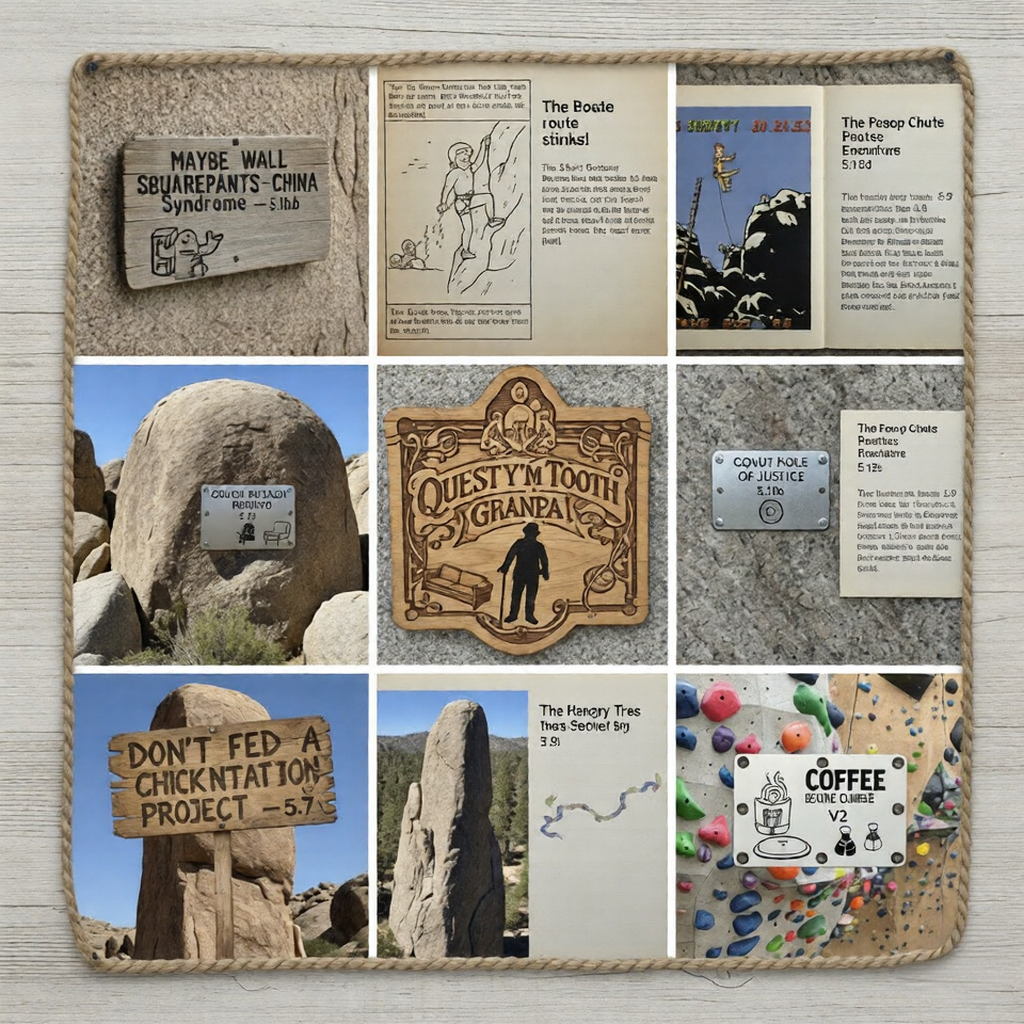
The climbing world’s Hall of Fame for absurd route names includes entries from legendary crags across the globe. Here are some standout examples that have earned their place in climbing folklore:
- Zen and the Art of Masturbation (5.12, Red River Gorge, KY) – A classic route with a name that simultaneously references Beat Generation philosophy and… well, you get it
- Sphincter Quits (Joshua Tree, CA) – Named for that moment of terror every climber knows too well
- Harry Butthole Pussy Potter (5.8+, location varies) – Because why name one route when you can offend multiple demographics at once?
- The Magical Chrome Plated Semi-Automatic Enema Syringe – Winner of the “Most Words Unnecessarily Strung Together” award
- Orgasm (Devil’s Lake, WI) – Paired with its shorter companion route, Foreplay
- If Bears Were Bees They’d Build Their Nests at the Bottom of Trees (V3) – A boulder problem that requires more breath to say than to climb
Offensive Names Being Changed
Not all route names age well. Recent years have seen a reckoning in the climbing community about offensive and inappropriate route names. Joshua Tree’s “Thin Line” was originally named something far more derogatory, and similar renaming efforts have occurred at crags worldwide. The debate centers on balancing climbing’s irreverent culture with basic respect and inclusivity. Some climbers argue for preserving historical naming traditions; others point out that offensive names aren’t “tradition”—they’re just offensive.
Location-Specific Route Name Highlights
Route naming culture varies dramatically from crag to crag, shaped by local climbing communities, regional humor, and the unique character of each climbing area. Some climbing destinations have developed distinct naming traditions—like Red Rock Canyon’s Panty Wall, where every route is named after underwear. The personality of a climbing area often reveals itself through its route names, offering a glimpse into the values, inside jokes, and cultural sensibilities of the climbers who pioneered those rocks. Here’s a tour through three iconic North American climbing destinations and their legendary approach to route nomenclature.
Red River Gorge, Kentucky: Puns and Pop Culture
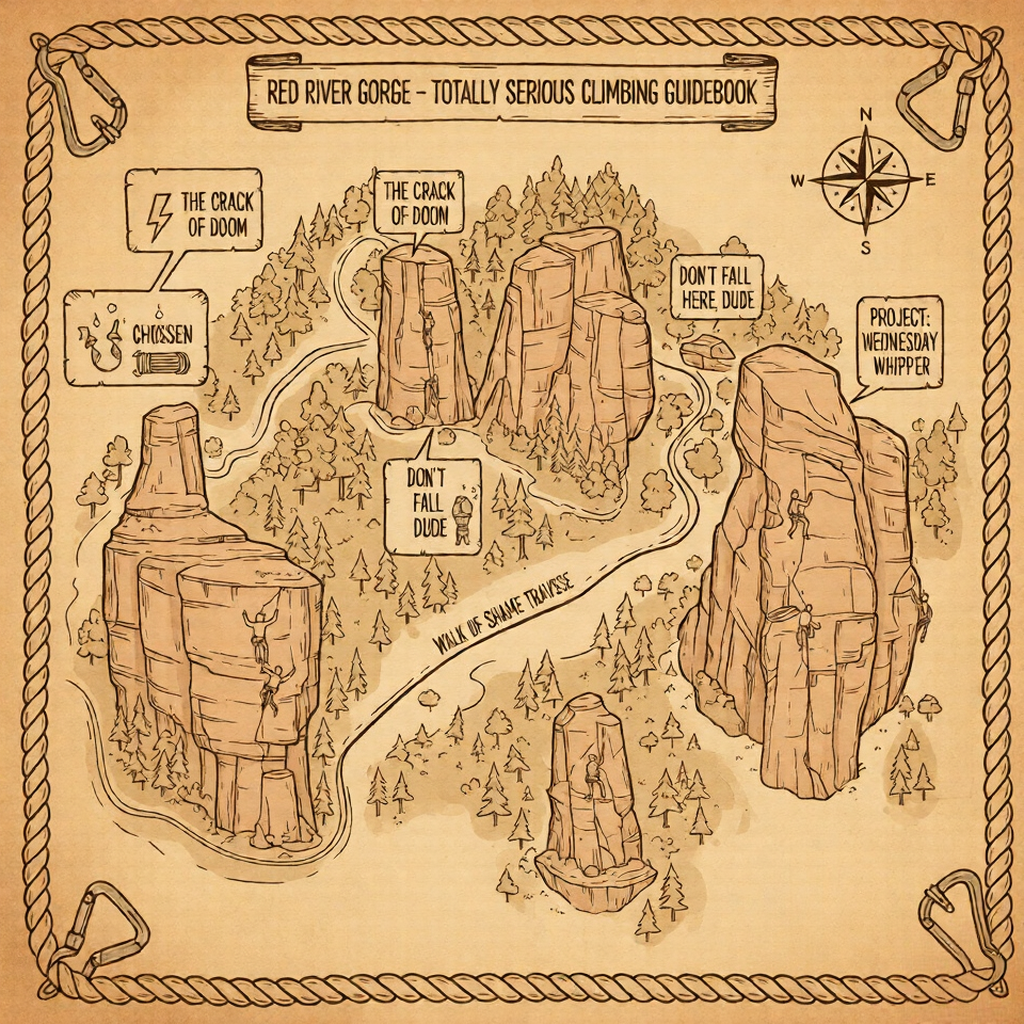
The Red River Gorge is legendary not just for its steep limestone sport routes but for its creative naming culture. Routes like Acrophobics Anonymous play on irony, while Creature Feature at Phantasia references the cave-dwelling critters you’ll encounter mid-climb. The Gorge’s guidebooks read like a comedian’s notebook, with first ascensionists competing to see who can craft the cleverest double entendre.
Joshua Tree, California: Desert Absurdism
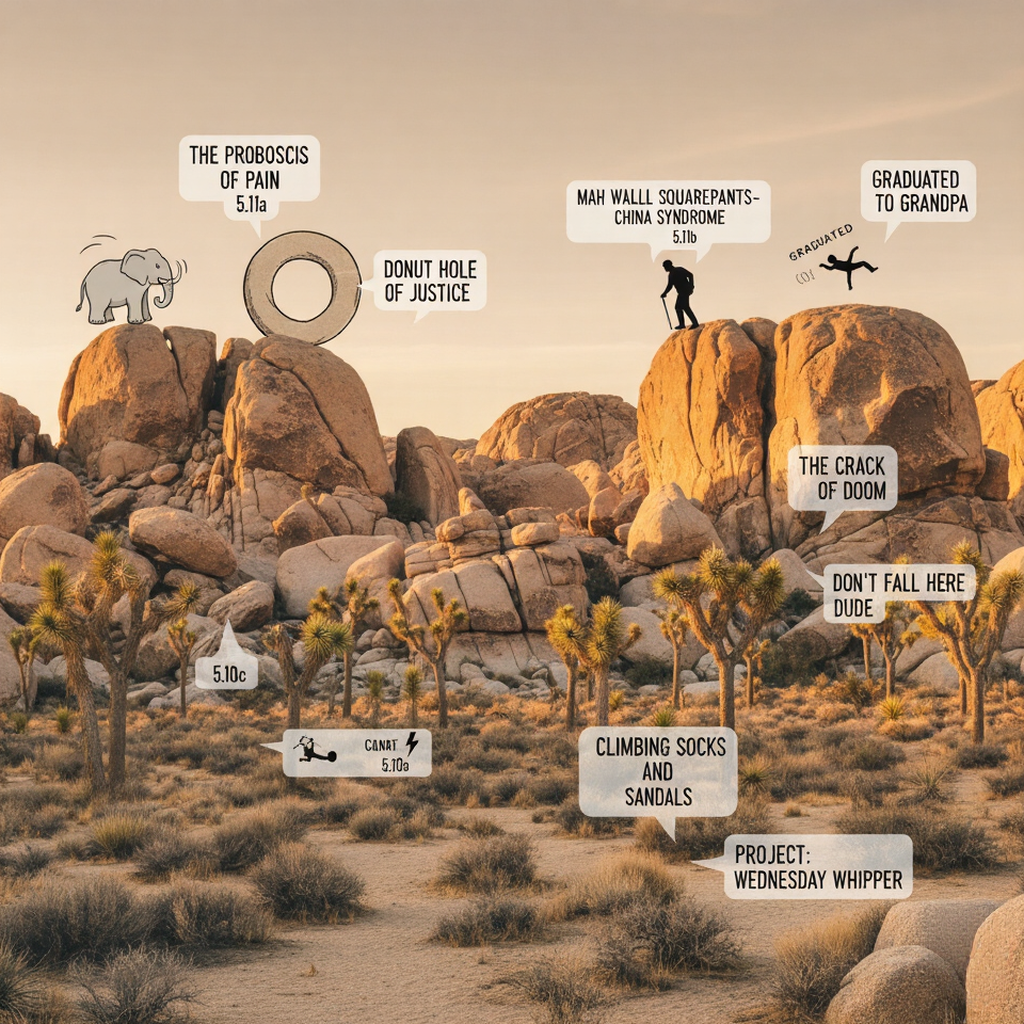
Joshua Tree’s granite boulders and crack climbs have spawned some of the most bizarre route names in North America. The desert heat may explain names like Sphincter Quits and the infamous renaming controversies that have plagued the park. Joshua Tree climbers seem to embrace absurdism as a coping mechanism for the brutal conditions and sharp rock.
Devil’s Lake, Wisconsin: Midwestern Wit Meets Runout Terror
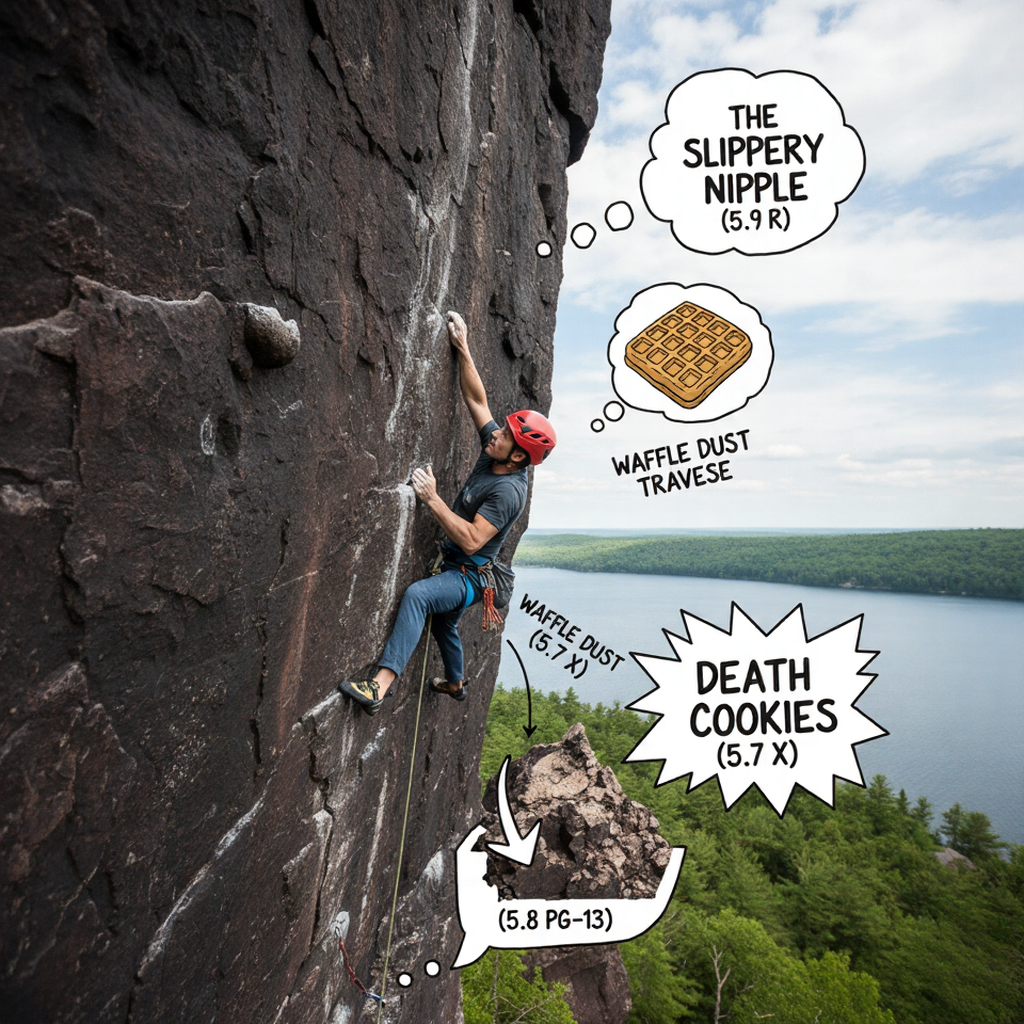
Devil’s Lake combines traditional climbing ethics with Midwestern sensibility, resulting in route names that mix humor with a healthy dose of fear. Orgasm and Foreplay are classic examples, while routes like The End (5.10a R/X) earn their names through sheer danger. When a route is named “The End,” you know the first ascensionist had a moment of existential clarity mid-climb.
Climbing Jokes & Humor: Laughing Through the Pain
Climbing culture thrives on self-deprecating humor and the kind of jokes that only make sense after you’ve spent hours grunting up a vertical wall. These jokes celebrate the absurdity of voluntarily subjecting yourself to physical punishment in pursuit of standing on top of rocks.
Classic Climbing Jokes
Here are some time-tested favorites from the climbing community:
- Question: What’s the difference between sport climbing, trad climbing, and bouldering?
- Answer: Sport climbing is one climber falling on a bolt. Trad climbing is one climber falling on another climber. Bouldering is one climber falling and missing a thick mat.
- The Three True Sports: “There are only three sports: bullfighting, motor racing, and mountaineering; all the rest are merely games”
- The Alpinist, the Traddie, and the Boulderer: An alpinist, a trad climber, and a boulderer sit around a campfire. The boulderer brags about his latest V12 project. The traddie talks about the 20-meter runout at the top of a pinched-off crack. They look to the alpinist, who quietly continues stirring the coals with his dick.
- T-Shirt Wisdom: “If you die, we split your gear”.
The Culture of Climbing Humor
Climbing humor serves a deeper purpose than just entertainment. In a sport where death is a genuine possibility and failure is constant, humor becomes a coping mechanism. Route names that make you laugh defuse the tension of staring up at a terrifying climb. Jokes about falling help climbers process fear. Memes about gear obsession acknowledge the financial insanity of the sport while building community.
The tradition of funny route names connects modern climbers to climbing’s rebellious, counterculture roots. When climbers name a route something absurd, they’re participating in a tradition of irreverence that dates back decades. It’s a reminder that while climbing is serious, climbers shouldn’t be, much like how Sherpa culture and traditions balance the sacred nature of mountains with the joy of community celebration.
Conclusion: Why Climbers Need Humor?
Whether you’re researching route names before your next trip to Red River Gorge, memorizing climbing slang to fit in at the gym, or just enjoying climbing memes during your rest day, humor is woven into the fabric of climbing culture. From the absurd route names scrawled in guidebooks to the puns that make non-climbers roll their eyes, climbing humor celebrates both the sport’s intensity and its fundamental absurdity. After all, what could be more ridiculous, or more human, than risking your life to stand on top of a rock?

Daniel Whitaker is a mountain journalist and lifelong climber with over 15 years of experience in the European Alps and the Andes. Although he has not yet attempted Mount Everest, he has summited several 6,000-meter peaks in South America and multiple classic alpine routes in the Mont Blanc massif. Daniel specializes in writing about the culture, history, and psychology of mountaineering. His work combines first-hand mountaineering experience with extensive research on Himalayan expeditions, making him an engaging guide to Everest’s enduring myths, records, and inspirational quotes.