
Everest Gear: Essential Equipment & Modern Innovations
Clothing & Summit Suit
The primary line of defense against temperatures that can plummet below -40°C is a sophisticated layering system, culminating in the iconic Mount Everest summit suit. This mount everest climbing gear has evolved alongside advances in material science, transforming comfort, weight, and safety for climbers attempting the world’s highest peak.
From Mallory’s Tweed to Modern Down Suits
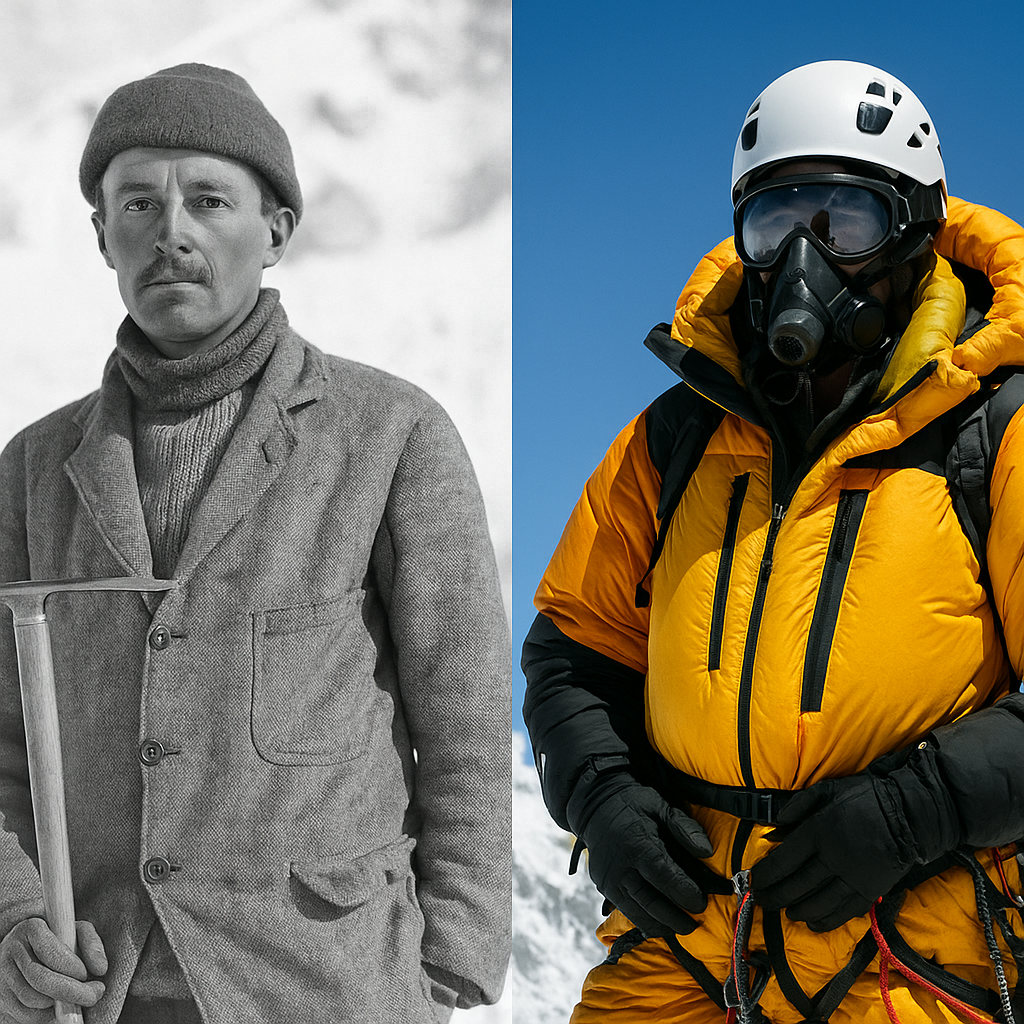
The famous Mallory clothing vs modern summit suits comparison highlights the incredible technological leap. George Mallory and Andrew Irvine attempted the summit in the 1920s wearing layers of silk, cotton, and wool under windproof gabardine and tweed jackets. Although the best available at the time, this equipment was heavy, restrictive, and offered minimal insulation when damp.
Modern suits are one-piece, down-filled marvels designed for maximum warmth with minimum weight. Made with materials like Gore-Tex, Pertex Shield, and other breathable membranes, they are fully waterproof, windproof, and filled with the highest-quality 800–900 fill-power goose down. These Mount Everest gear innovations have redefined insulation at altitude, adding features like helmet-compatible hoods, internal harness loops, and emergency oxygen mask integration. For deeper insights, see our guide to modern down and synthetic summit suits.
Down Suit vs Synthetic Insulation for Everest
Down offers unmatched warmth-to-weight ratio but loses efficiency when wet. Synthetic fills such as PrimaLoft retain heat when damp, rendering them safer for extended expeditions.
Best Layering Systems for Mount Everest Expeditions
Base layer (moisture-wicking), mid-layer (fleece or lightweight down), shell (windproof Gore-Tex), and belay layer (heavy parka for rest stops). These high-altitude mountaineering clothing systems are key for summit success.
Boots & Gloves
Frostbite is one of the most common and severe injuries encountered on Everest. Protecting the extremities is crucial, and modern Mount Everest boots and gloves are highly specialized pieces of mountain gear crafted for survival, not merely comfort. Choosing the best gear for Mount Everest means balancing warmth, weight, and fit — critical factors in preventing frostbite and exhaustion.
Boots, Crampons, and Frostbite Prevention
Climbers use double or triple-layer high-altitude boots featuring an insulating inner bootie, a rigid outer shell, and an integrated gaiter. They are designed to be fully compatible with heavy-duty crampons required for climbing steep ice on the Lhotse Face or other technical sections of the climbing routes. The latest Mount Everest expedition boots use lightweight carbon-fiber midsoles and aerogel liners for enhanced warmth and moisture control. The primary objective is to keep feet warm and dry, thus preventing frostbite.
Gloves and Mittens
A three-layer hand system remains standard, comprising thin liners for dexterity, insulated mid-gloves for warmth, and thick down mitts as the outermost layer. Many climbers now rely on battery-heated gloves or mount everest insulated gloves for sale through specialty outfitters. Always carry a backup pair; losing gloves above 8,000 m can mean instant frostbite.
Mount Everest Crampons vs Microspikes
Crampons with 12–14 steel points are essential on ice routes and technical faces, while microspikes are better suited for the trek to Base Camp. Proper sizing with boots prevents slippage and ensures safety on icy terrain.
Oxygen Systems
Supplemental Mount Everest oxygen bottles remain one of the most critical pieces of modern Mount Everest climbing technology. Using supplemental oxygen can dramatically increase a climber’s endurance, awareness, and survival rate above 8,000 meters — where air contains only one-third the oxygen found at sea level.
A Brief History of Supplemental Oxygen
The initial experiments with oxygen took place during the 1922 British expedition. These early systems were heavy, unreliable, and often leaked. For several decades, a debate continued about whether using oxygen was considered “sporting.” Reinhold Messner and Peter Habeler famously settled the debate in 1978 by climbing Everest without it, but their feat remains an exception. For the vast majority, oxygen is essential.
Modern Oxygen Systems
Today’s systems are lighter, more efficient, and safer than earlier versions. A standard setup includes:
- Carbon Fiber Bottles: (3–4 liters, 200 bar pressure) — replacing older steel models.
- Regulators: that control flow rates between 2–4 L/min and conserve oxygen during rest.
- Specialized masks: designed to resist freezing even at -40°C.
Finding the best oxygen masks for Mount Everest and understanding flow settings is key to summit success. Most climbers use 4–6 bottles during the summit push, adding around $3,000–$5,000 to the total Mount Everest gear cost.
Mount Everest Oxygen System Brands – The most trusted names include Summit Oxygen, Poisk, and TopOut, each offering adjustable regulators and ergonomic mask designs.
Modern Innovations
Smart digital gauges now display pressure and remaining oxygen time, while lighter carbon composites help reduce bottle weight. These advances define next-generation Mount Everest expedition equipment.
Technical Gear & Safety Tools
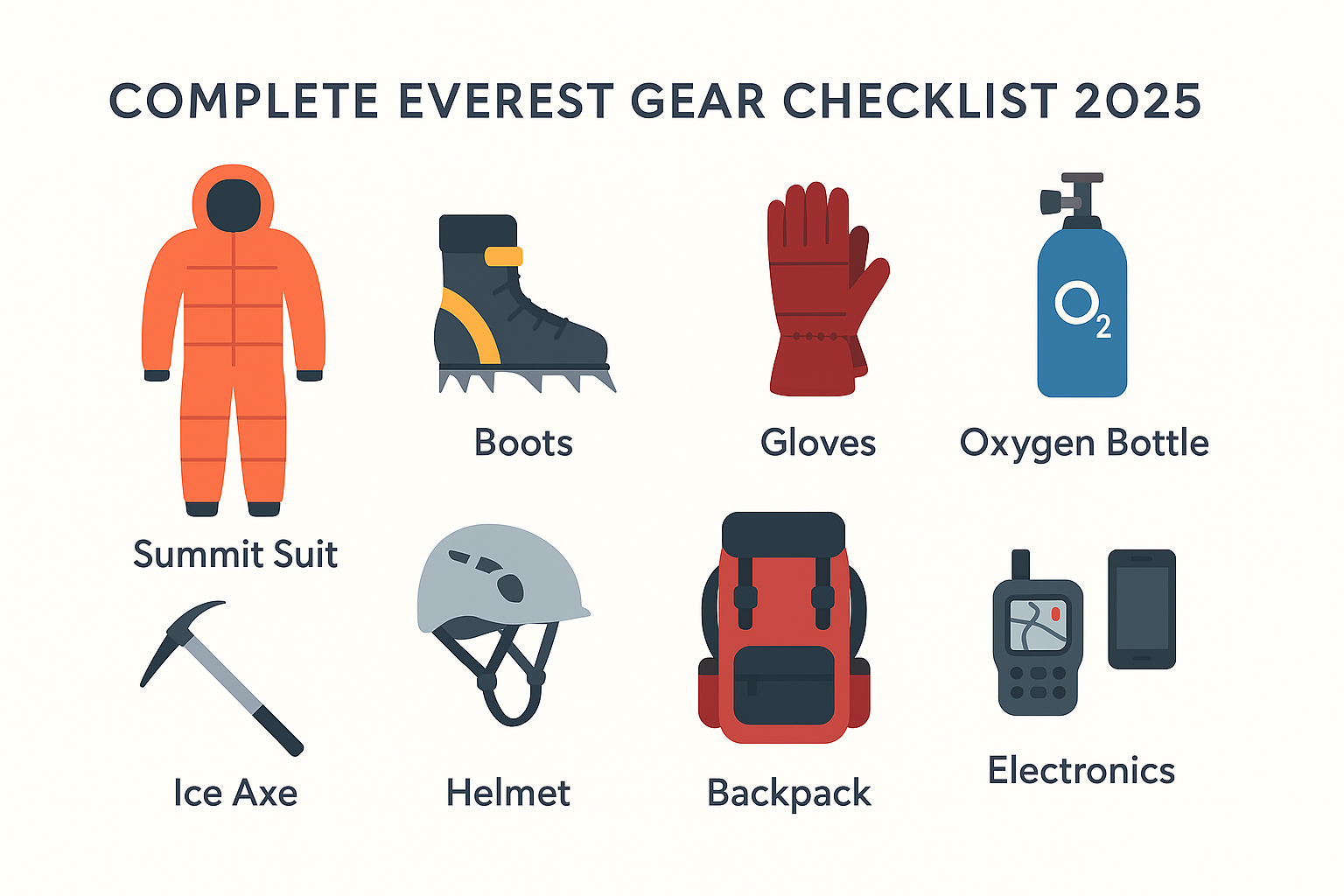
Beyond staying warm, climbers rely on a specialized set of tools to move safely through vertical ice and rock. This forms the core of the Mount Everest climbing gear checklist — equipment that allows climbers to clip into safety lines, cross ladders, and ascend fixed ropes in near-death-zone conditions.
- Ice Axe: Essential for self-arrest in case of a slip and for balance

Daniel Whitaker is a mountain journalist and lifelong climber with over 15 years of experience in the European Alps and the Andes. Although he has not yet attempted Mount Everest, he has summited several 6,000-meter peaks in South America and multiple classic alpine routes in the Mont Blanc massif. Daniel specializes in writing about the culture, history, and psychology of mountaineering. His work combines first-hand mountaineering experience with extensive research on Himalayan expeditions, making him an engaging guide to Everest’s enduring myths, records, and inspirational quotes.